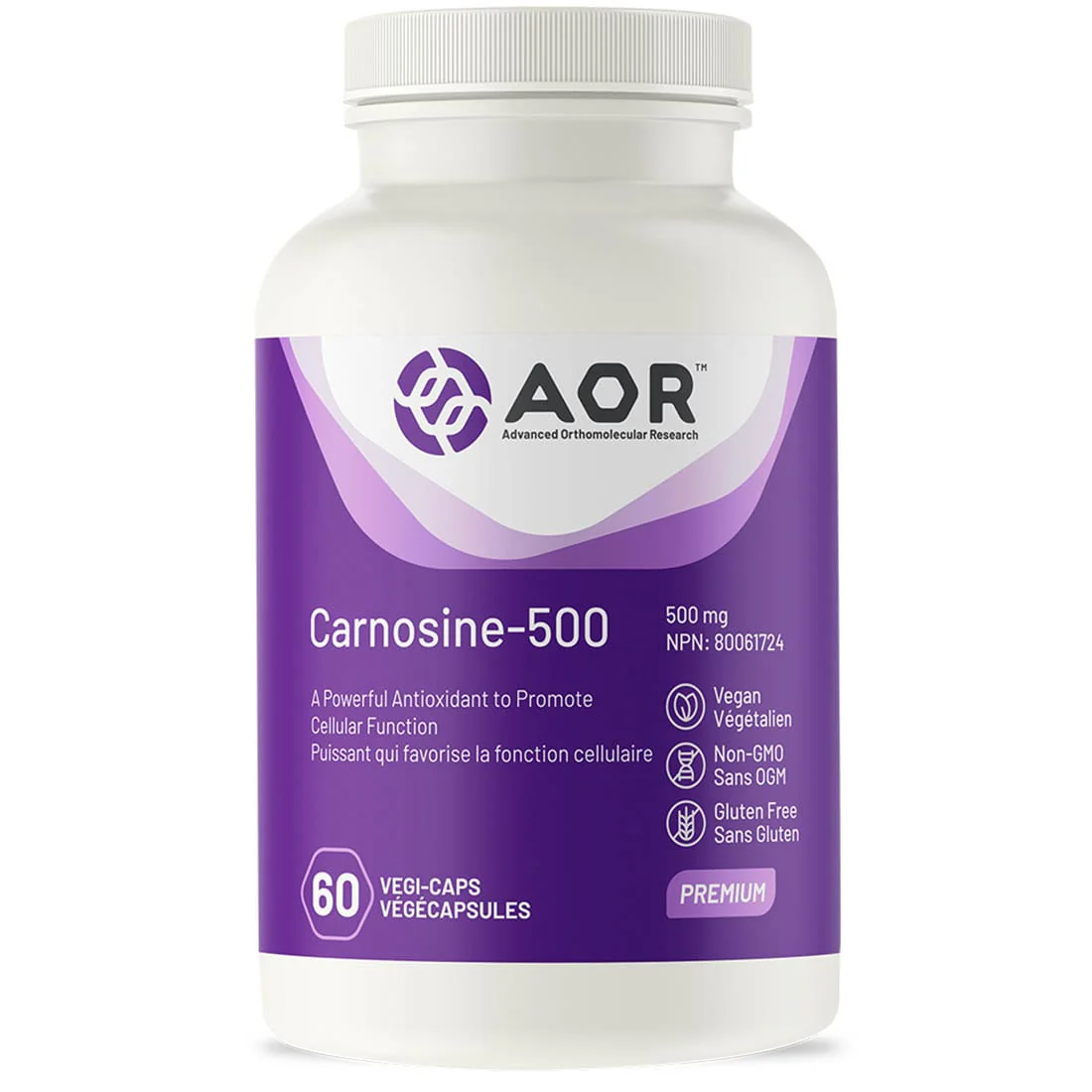
AOR Carnosine-500, 500mg, 60-120 Vegetable Capsules
AOR Carnosine-500 Details
- Provides beta-alanine and L-histidine
- Prevents cellular damage
- Rejuvenates cells
- Supports muscle function
Carnosine is a simple dipeptide (that is, two amino acids joined together – in this case, beta-alanine and histidine). But don’t let that simplicity fool you: simply put, Carnosine is the most exciting anti-aging nutrient ever discovered. Carnosine is made by many cells in your body – and especially in muscle, heart, and brain cells. Longer-lived animals tend to have more Carnosine in their cells than do shorter-lived species, and preliminary research suggests that levels of Carnosine decline with aging (by 63% between the ages of 10 and 70 in humans).
Carnosine plays a central part in muscle contraction and in preventing fatigue, fending off lactic acidosis and allowing isolated muscle cells that have been pushed beyond their workload limits to contract again. In nerves, its concentration is so targeted, and its release so regular, that it was once thought to be a neurotransmitter; while it now looks as if that’s unlikely, Carnosine does play an important role in modulating brain cell function, simultaneously making neurons more sensitive to certain signals and protecting neurons from toxicity from overstimulation. In heart cells, Carnosine appears to be a central player in regulating the heartbeat through its role in regulating calcium ions. But none of that explains its ability to make old cells young.
More Images
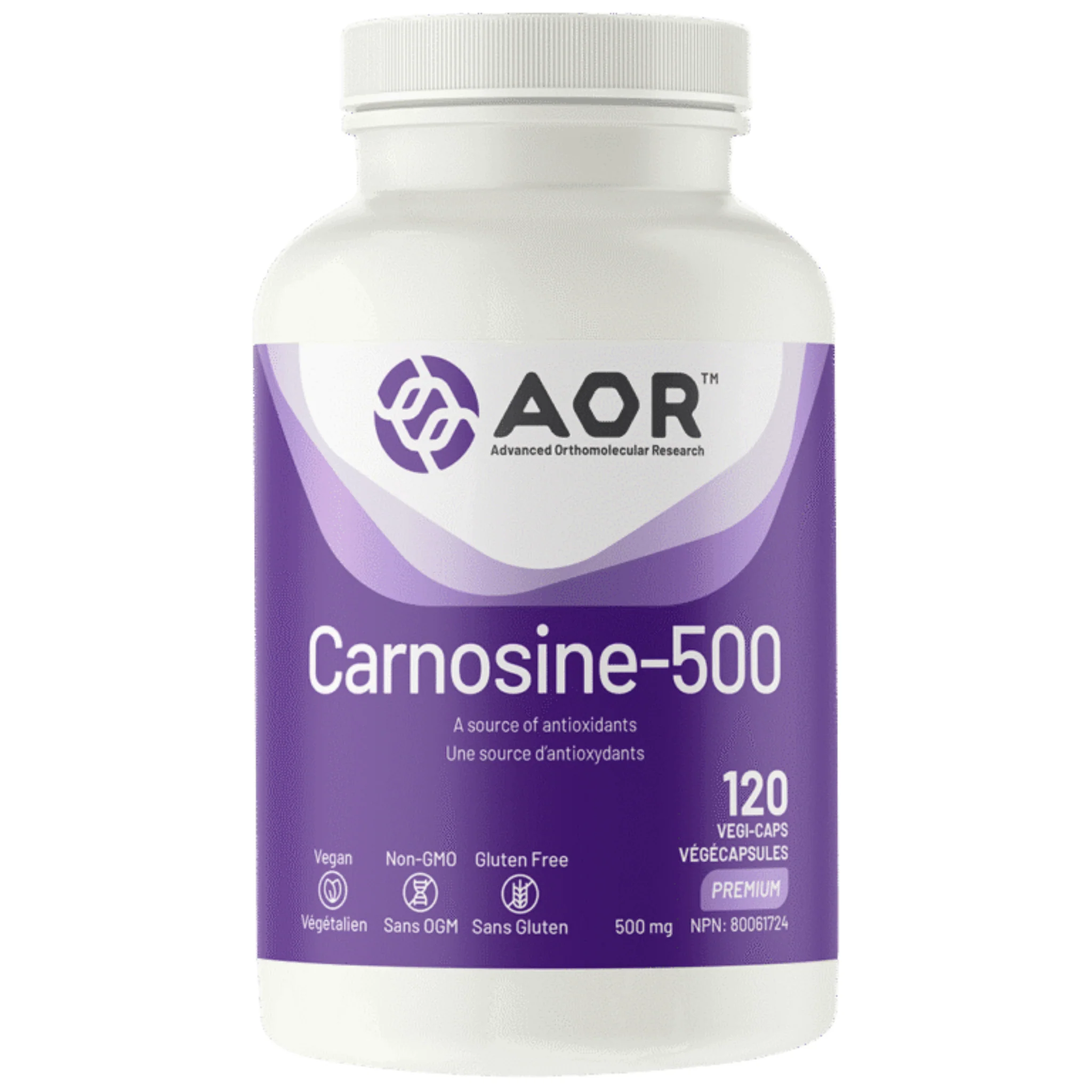
AOR Carnosine-500, 500mg, 60-120 Vegetable Capsules
AOR Carnosine-500 Details
- Provides beta-alanine and L-histidine
- Prevents cellular damage
- Rejuvenates cells
- Supports muscle function
Carnosine is a simple dipeptide (that is, two amino acids joined together – in this case, beta-alanine and histidine). But don’t let that simplicity fool you: simply put, Carnosine is the most exciting anti-aging nutrient ever discovered. Carnosine is made by many cells in your body – and especially in muscle, heart, and brain cells. Longer-lived animals tend to have more Carnosine in their cells than do shorter-lived species, and preliminary research suggests that levels of Carnosine decline with aging (by 63% between the ages of 10 and 70 in humans).
Carnosine plays a central part in muscle contraction and in preventing fatigue, fending off lactic acidosis and allowing isolated muscle cells that have been pushed beyond their workload limits to contract again. In nerves, its concentration is so targeted, and its release so regular, that it was once thought to be a neurotransmitter; while it now looks as if that’s unlikely, Carnosine does play an important role in modulating brain cell function, simultaneously making neurons more sensitive to certain signals and protecting neurons from toxicity from overstimulation. In heart cells, Carnosine appears to be a central player in regulating the heartbeat through its role in regulating calcium ions. But none of that explains its ability to make old cells young.
Product Information
Product Information
Shipping & Returns
Shipping & Returns
Description
AOR Carnosine-500 Details
- Provides beta-alanine and L-histidine
- Prevents cellular damage
- Rejuvenates cells
- Supports muscle function
Carnosine is a simple dipeptide (that is, two amino acids joined together – in this case, beta-alanine and histidine). But don’t let that simplicity fool you: simply put, Carnosine is the most exciting anti-aging nutrient ever discovered. Carnosine is made by many cells in your body – and especially in muscle, heart, and brain cells. Longer-lived animals tend to have more Carnosine in their cells than do shorter-lived species, and preliminary research suggests that levels of Carnosine decline with aging (by 63% between the ages of 10 and 70 in humans).
Carnosine plays a central part in muscle contraction and in preventing fatigue, fending off lactic acidosis and allowing isolated muscle cells that have been pushed beyond their workload limits to contract again. In nerves, its concentration is so targeted, and its release so regular, that it was once thought to be a neurotransmitter; while it now looks as if that’s unlikely, Carnosine does play an important role in modulating brain cell function, simultaneously making neurons more sensitive to certain signals and protecting neurons from toxicity from overstimulation. In heart cells, Carnosine appears to be a central player in regulating the heartbeat through its role in regulating calcium ions. But none of that explains its ability to make old cells young.